On the second day of the partner meeting, the ResNRJwater partnership left Essen for KLEM in Dinslaken. KLEM is Emschergenossenschaft's wastewater treatment plant at the Emscher estuary, just before the river flows into the Rhine. With a capacity of 1.4 million population equivalent, it is one of the four largest plants operated by EG.
Originally built in 1976, it has been modernised several times. EG is currently investing 150 million euros there in new digesters and CHP units, PV installations and a new training workshop. The plant also tells the story of the region's transformation. It used to be fed by the river, but today all of its wastewater arrives through the new underground Emscher sewer, while the Emscher itself simply flows past. Few places show more clearly what the project is about: a facility built to clean water that is becoming part of the energy system. A view from Brussels
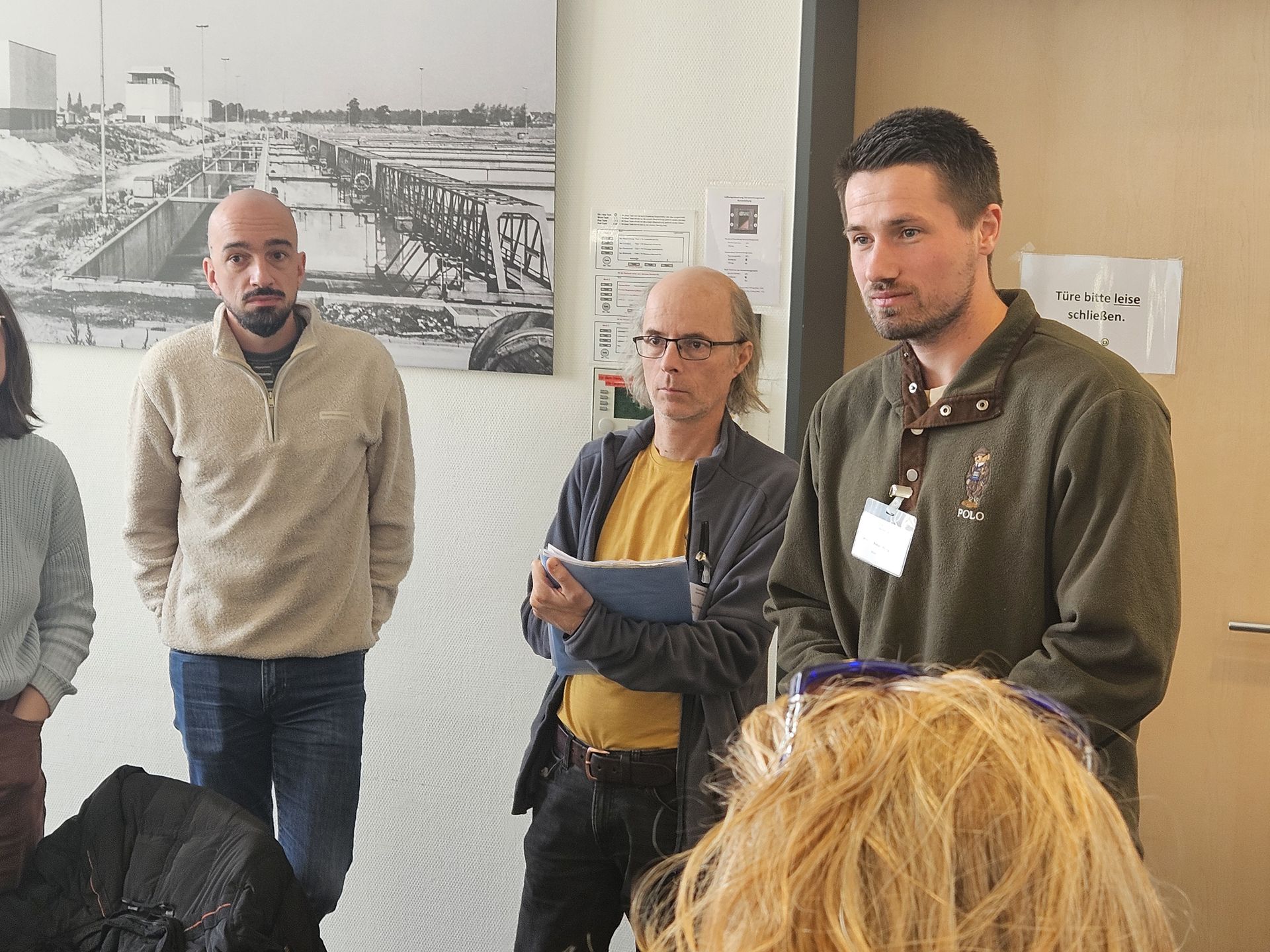
The day began at European level. Arthur Guischet, Secretary General of the European Water Association (EWA), explained what is currently being discussed in the "so-called Brussels Bubble". His focus was the Urban Wastewater Treatment Directive and the delegated and implementing acts that will put it into practice. For EWA, projects like ResNRJwater link policy and practice.
From the ground to policy recommendations
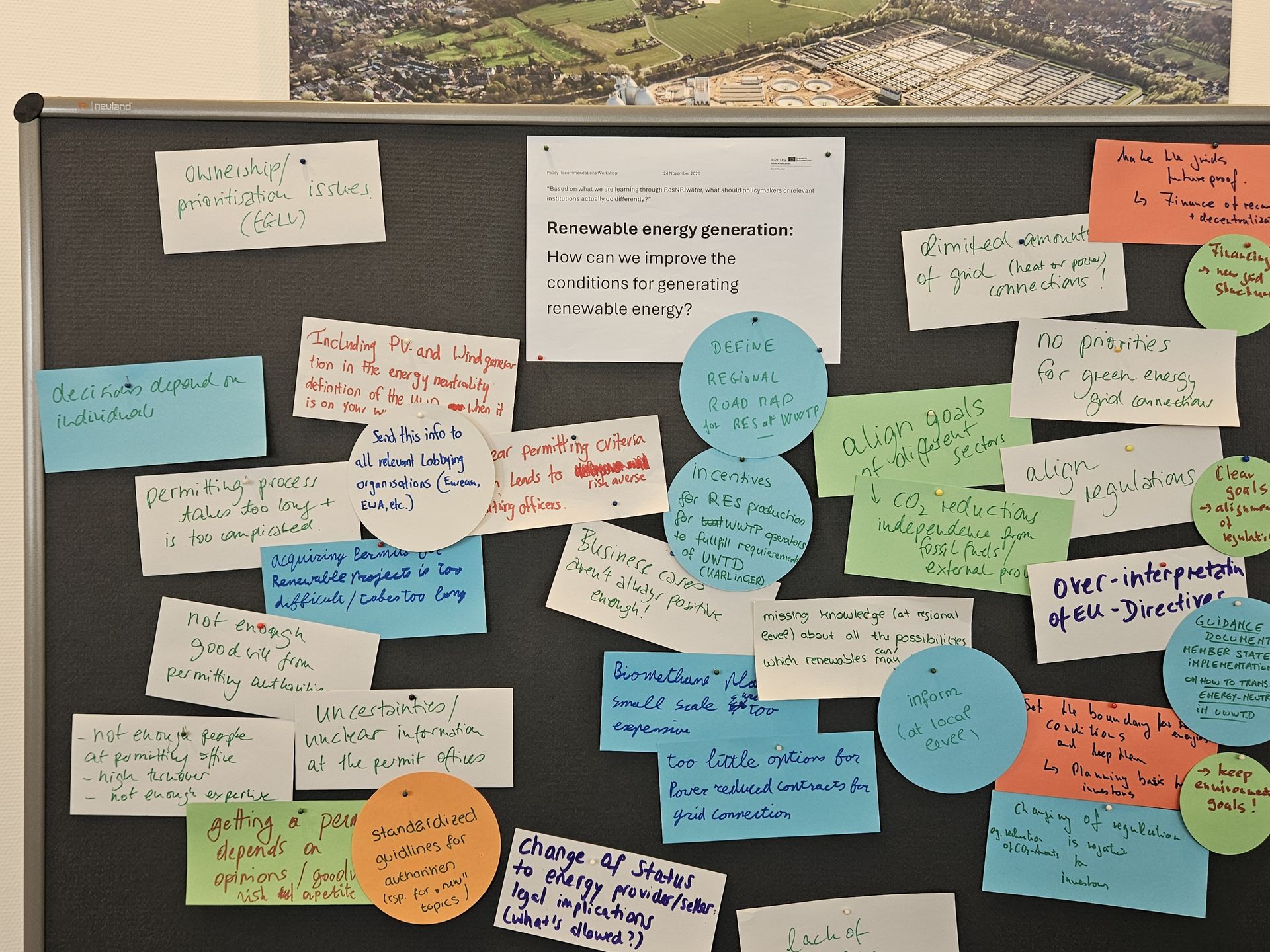
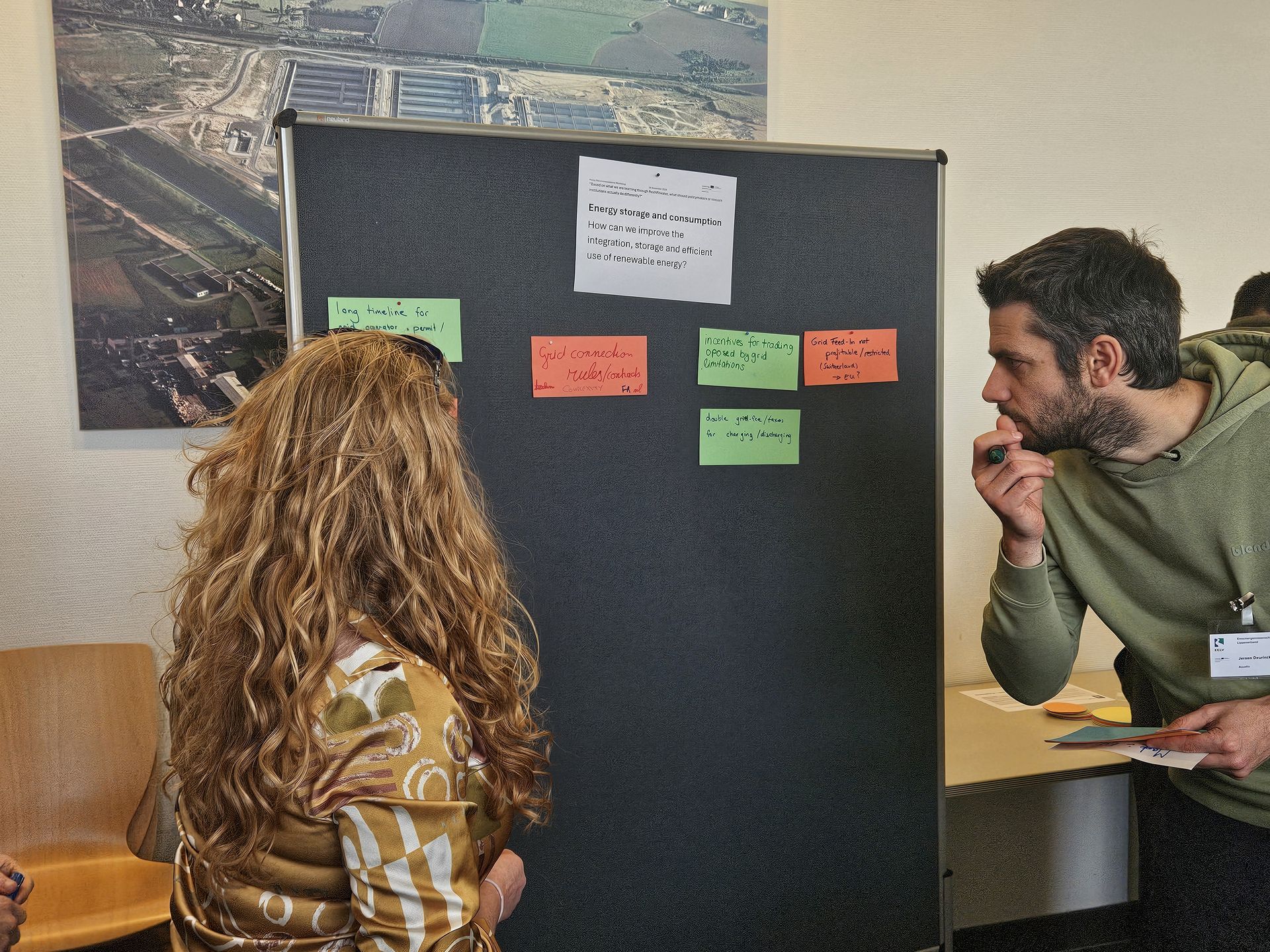
In the workshop that followed, led by Denise Winters (HHNK) and Lisa Schiferle (Lippeverband), the partners worked on the ResNRJwater strategy and policy recommendations. This is where the experience from the pilot sites is meant to become proposals for decision-makers. It is the same path from the ground to Brussels that Guischet described.
Heat from wastewater
After lunch, Lara Elliott, Mona Hashemi and Stephan Sander (EG) presented updates on aquathermal energy and on Emschergenossenschaft's energy studies. Aquathermal energy is the use of the heat stored in water and wastewater. A tour of the plant then showed the partners where all this is meant to happen.
An evening in a former ironworks
The day ends at Landschaftspark Duisburg-Nord, a heavily industrialised landscape that has been turned into a park. A guided tour by head torch shows the challenges of transforming the landscape, past and present. Dinner follows at the "Hauptschalthaus", the former main switch house of the industrial plant. It is a fitting end to the day. An industrial site that lost its original purpose has found a new one, much like the water infrastructure that ResNRJwater wants to give a new role in the energy system.